hal
Agentic Coding Assistants
A native R interface to agentic coding assistants. Talks directly to local command line interfaces ('GitHub Copilot', 'Anthropic' 'Claude Code') over standard input/output and to a local 'vscode.lm' bridge inside 'Positron', providing multi-model chat, tool calling, and in-session R evaluation. Supports a single stateful hal() session as well as disposable hal_ask() / hal_do() pipeline verbs, plot capture so models can see graphics, verified data transforms, and user-defined tools.
hal 

A coding agent for R. Not a chatbot – an agent that reads your code, searches your codebase, edits files, and runs commands. Zero API keys, three pluggable backends:
- vscode (default in Positron) – talks to
vscode.lmvia the bundled hal-bridge extension. No CLI install, no extra auth beyond your Positron Copilot sign-in, andeval_rround-trips through R directly without an MCP subprocess. The lowest-friction path. - Copilot – GitHub Copilot CLI in ACP mode. 17 models, flat subscription, mid-session model switching with preserved context, Plan / Autopilot modes.
- Claude – Anthropic Claude Code CLI. 3 models, 5-hour quota
visibility via
hal_quota(), plugs into the Claude Code skills / hooks / MCP ecosystem.
If you’re in Positron, do nothing – hal_setup() installs the bridge
from inst/extdata/ in one call and you’re off. If you’re elsewhere,
hal_setup() installs the Copilot CLI. Switch any time with
hal_configure(backend = "...").
Bullet features:
- Full coding agent – file read/write, code search, shell commands
on Copilot and Claude; chat +
eval_r+ custom tools on vscode - Pluggable backend – one R interface, three transports
- Zero API keys – piggybacks on your existing Copilot / Claude subscription
- Custom tools via MCP / direct – turn any R function into an LLM-callable tool
- Environment-aware –
use_env = TRUElets the agent read live R objects viaeval_r - Project memory –
hal.mdpersists context across sessions - Built-in governance – credential scanning, eval denylist, permissions
- Edit-in-place –
hal_do()replaces itself in your script with generated code - Spreadsheet migration –
hal_excel()turns an.xlsxinto a verified tidyverse script, checked cell-for-cell against Excel’s own cached values - Plot vision – plots drawn by
eval_rare captured and sent to the model as images (vscode + claude backends), so it can see and iterate on your actual charts - Verified transforms –
hal_do()reports row/column/NA deltas after every transform and warns when output looks suspicious
Install
# install.packages("pak")
pak::pak("ArcLite-Red/hal")
library(hal)

hal_setup()    # auto-picks the right backend for your host
hal_setup() walks you through the appropriate path. In Positron it
installs the hal-bridge extension from the VSIX bundled with hal (no
download, no GitHub auth); elsewhere it installs the Copilot CLI.
Pick a different backend explicitly if you want:
hal_configure(backend = "vscode")    # Positron + hal-bridge extension
hal_configure(backend = "copilot")   # GitHub Copilot CLI (ACP)
hal_configure(backend = "claude")    # Anthropic Claude Code CLI
Verify (one traffic-light report, ends with the next step if anything is missing):
hal_status()
#> -- hal status ------------------------------------------------------
#> i hal 0.1.4 | backend: "vscode" (auto: Positron detected)
#> v hal-bridge 0.1.4 responding on port 51234.
#> i No active session (one starts on your first hal() call).
#> v Ready. Try: hal("Hello!")
Converse
Multi-turn conversation with a coding agent. Session persists across calls.
hal("What are the top 3 dplyr verbs and when would I use each?")
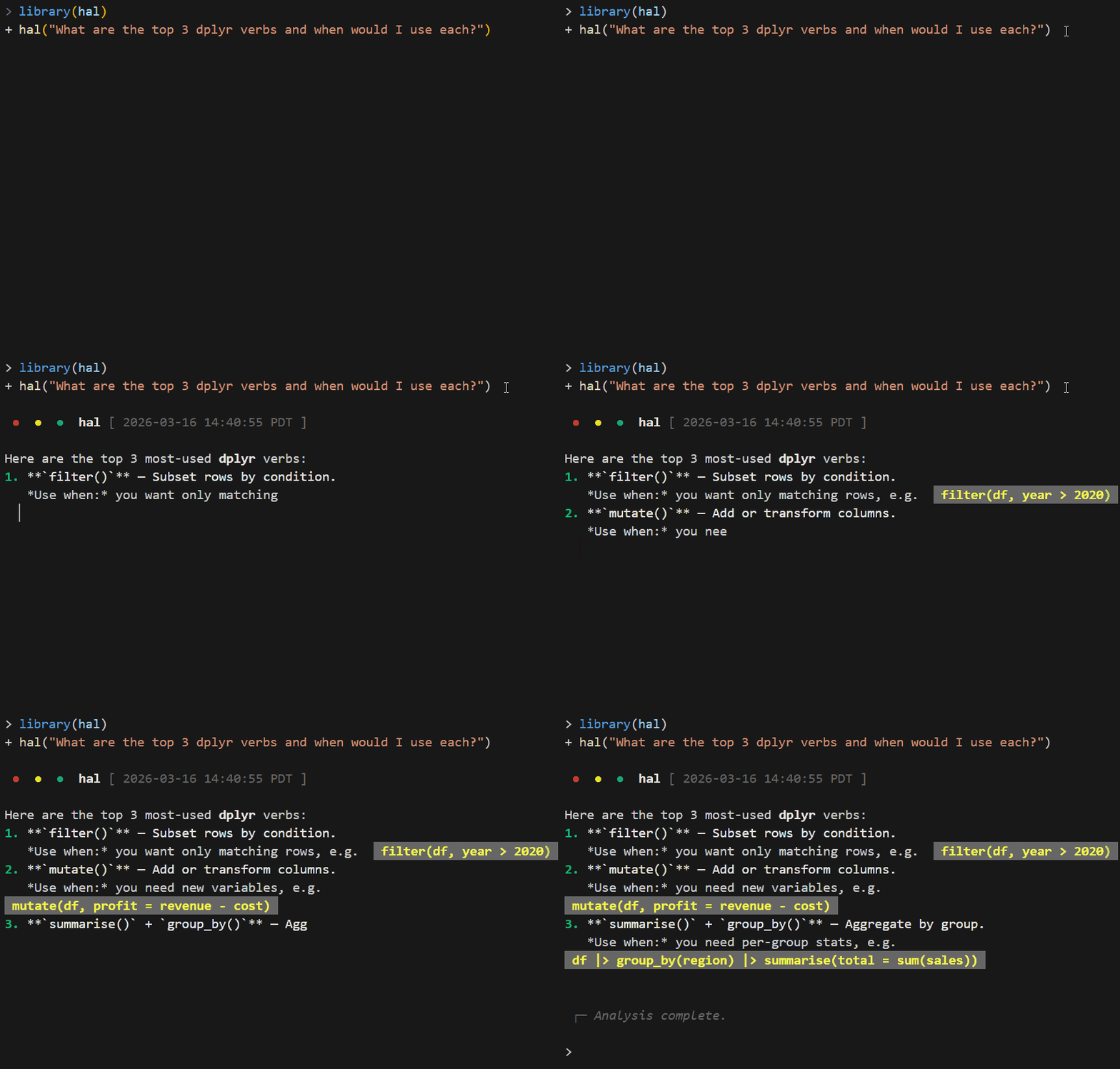
hal("Show me a filter example")
hal("Now group_by and summarise")
Analyze data
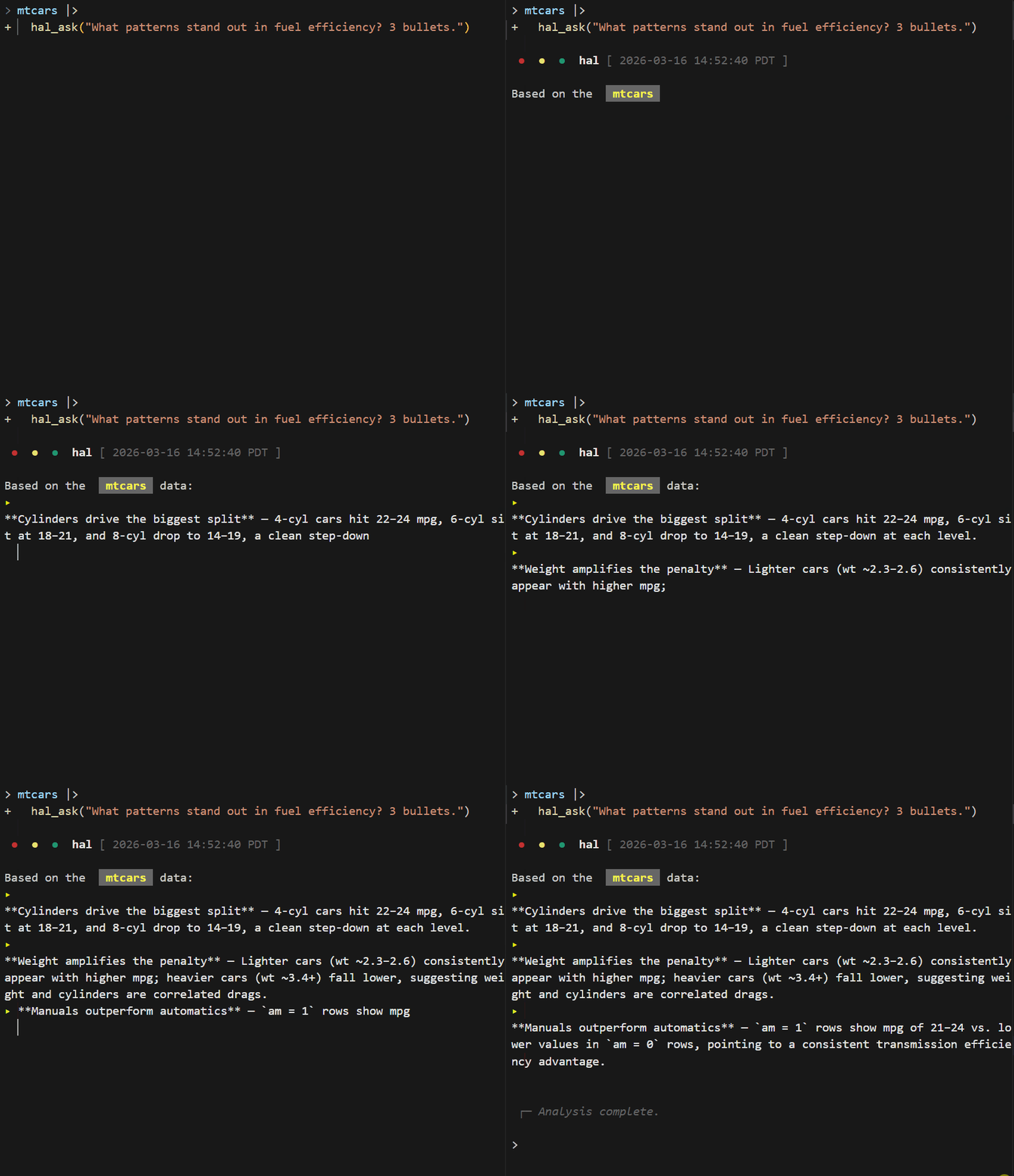
Pipe any object into hal_ask(). Your data flows through unchanged.
mtcars |>
  hal_ask("What patterns stand out in fuel efficiency? 3 bullets.")
Generate code
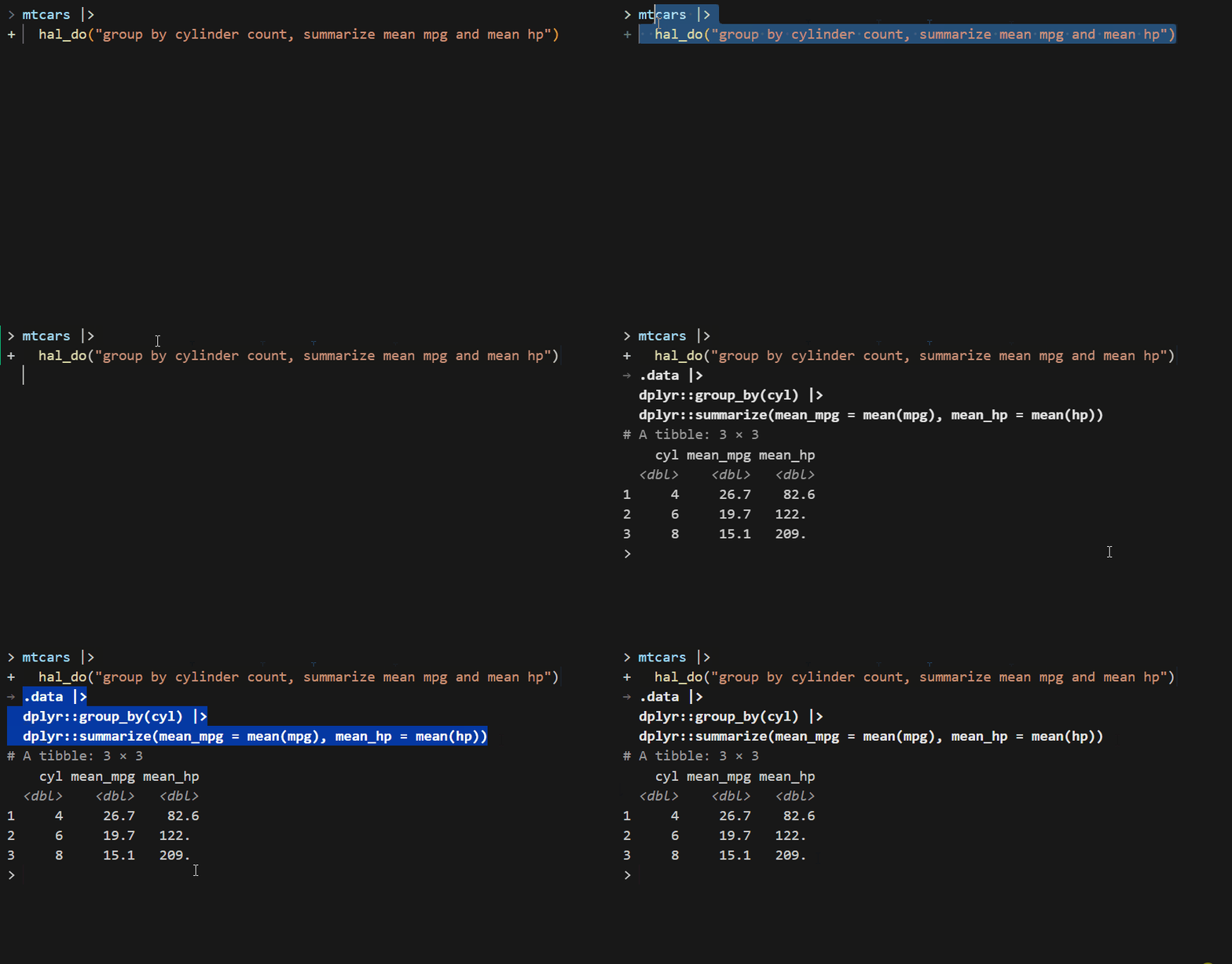
hal_do() generates R code, executes it, and returns the result – then
verifies the transform and reports what structurally changed:
mtcars |>
  hal_do("group by cylinder count, summarize mean mpg and mean hp")
#> i hal_do: 32 -> 3 rows | -9 cols (...) | +2 cols (mean_mpg, mean_hp)
The full report lives at attr(result, "hal_verify"); suspicious output
(identical to input, 0 rows) warns. Report-only – it never changes your
data.
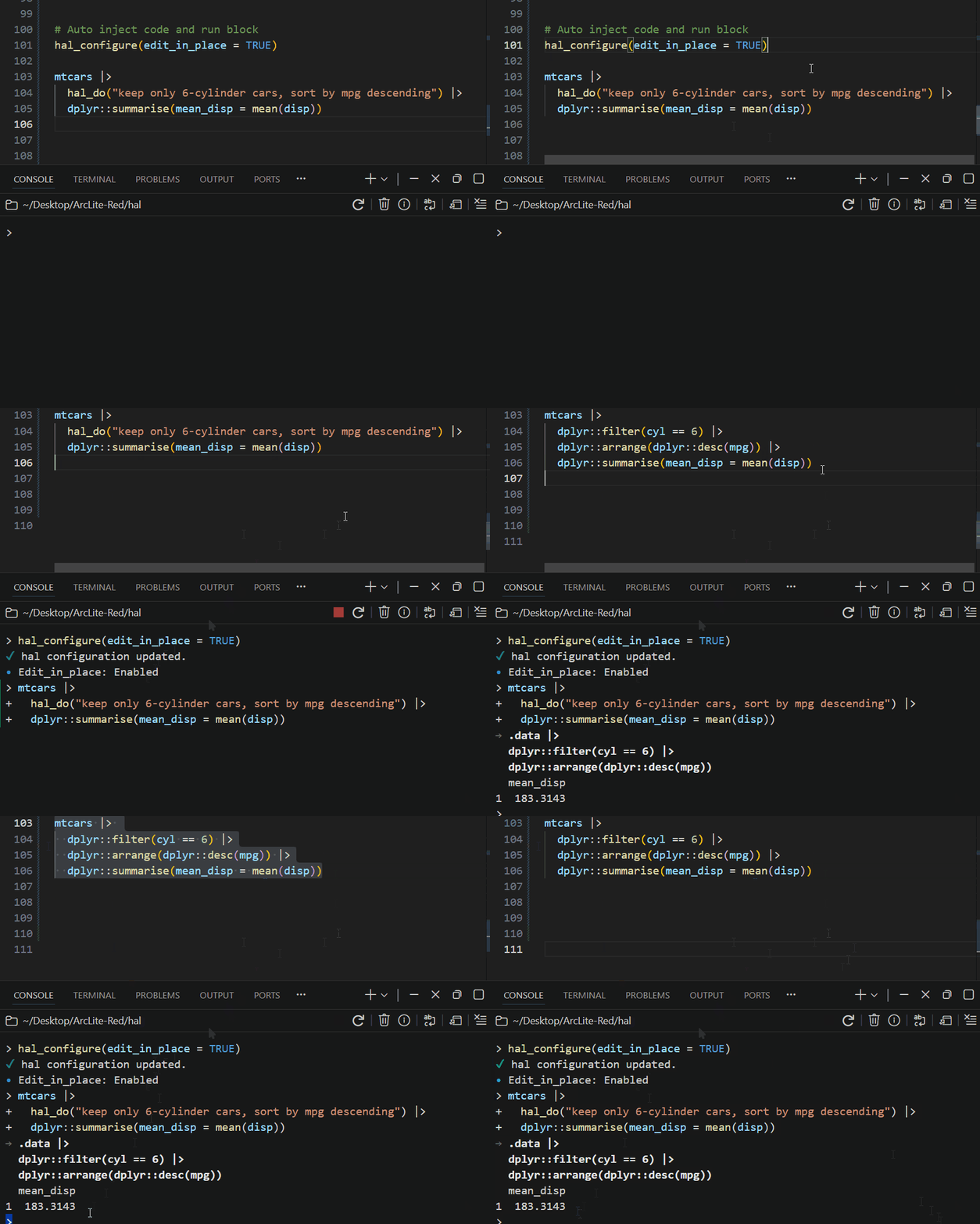
In RStudio or Positron, hal_do() replaces itself in your editor with
the generated code:
Replace a spreadsheet
hal_excel() reads an .xlsx, treats the non-formula columns as data,
and translates each formula column into a tidyverse expression – then
verifies every translation against the values Excel itself cached,
row for row. Columns that match go into a live mutate() pipeline;
anything that doesn’t is emitted as a commented stub to review. The
result is a runnable R script that replaces the workbook:
hal_excel("sales_model.xlsx")
#> v revenue: verified (120/120 rows match Excel)
#> v margin: verified (120/120 rows match Excel)
#>
#> data <- openxlsx2::read_xlsx("sales_model.xlsx", sheet = "Sheet1", ...)
#> result <- data |>
#>   dplyr::mutate(
#>     revenue = units * unit_price,
#>     margin = (revenue - cost) / revenue
#>   )

code <- hal_excel("sales_model.xlsx")
attr(code, "hal_excel")          # per-column verification report
writeLines(code, "sales_model.R")
If you run it from an open script, it replaces the hal_excel() call
with the generated code – the spreadsheet-to-script migration is one
line.
See your plots
On the vscode and claude backends, plots drawn by eval_r are captured
and sent to the model as images – it critiques what the chart actually
looks like, not what the code suggests it might:
df <- mtcars
hal("Draw a scatter of mpg vs wt and describe the relationship you see")
#> i hal: plot captured for the model.
# ... the model references the actual visual: clusters, outliers, curvature

hal("Make it publication-ready: labels, theme, annotate the outliers")
# It sees each iteration and refines against the rendered result.
Returned ggplot objects are printed to your device too, so everything
shows up in your plots pane as usual. Disable with
hal_configure(plot_vision = FALSE).
Go further
# Give the agent access to live objects in your R session
df <- mtcars
hal("Which rows in df have above-median mpg?", use_env = TRUE)

# Mid-pipe transform with retry on failure
iris |>
  hal_do("z-score each numeric column, ignoring Species", .retries = 2)

# Switch models on the fly (Copilot; Claude resets via hal_reset())
hal("Summarize this codebase", model = "claude-haiku-4.5")
hal("Now review it for edge cases", model = "claude-opus-5")

# Register custom tools
hal_register_tool(
  fun = function(ticker) paste("$142.50 for", ticker),
  name = "stock_price",
  description = "Get current stock price",
  types = list(ticker = "string")
)
hal("What's the stock price of AAPL?")

# Track usage and (on Claude) the 5-hour quota window
hal_usage()
hal_quota()

# R6 API for multiple sessions, Shiny, or full control
chat <- hal_chat(model = "claude-sonnet-5", echo = "all")
chat$chat("Read DESCRIPTION and list the dependencies")
chat$switch_model("gpt-4.1")
chat$chat("Are any of those dependencies unnecessary?")
How it works
              R session
                 |
                 v
            hal (R6 + S3)        one API, pluggable transport
                 |
    +------------+------------+
    |            |            |
    v            v            v
  vscode      Copilot       Claude
 localhost      ACP        -p / resume
   HTTP       server        per-turn
    |            |            |
    v            v            v
 hal-bridge    GitHub      Anthropic
 vscode.lm    Copilot       Claude
 (Positron)  17 models     3 models
All three transports converge on the same hal_response / hal_turn /
hal_tool_call S3 objects, so your code doesn’t care which backend you
pick. vscode speaks HTTP to the localhost bridge; Copilot and Claude
speak NDJSON / stream-json over stdio.
hal’s Copilot path uses the ACP transport (not the HTTP proxy). Multi-turn Claude via HTTP has a known format-translation bug; via ACP it works correctly.
Learn more
vignette("getting-started")– setup, configuration, backends, full walkthroughvignette("backends")– vscode / Copilot / Claude trade-offs, costs, quotavignette("agent-tools")– built-in tools,eval_r, permissions, custom MCP tools- Reference docs – full API reference